コンテンツに進む

A gala is a formal evening event built around a defined dress code. The three most common are formal, black tie, and white tie. The right gala dress is a floor-length gown in a rich fabric — silk, satin, lace, or stretch velvet — styled with the kind of restraint the occasion calls for. This guide walks through the dress code, the fabric and color choices that read formal, and five Nana Jacqueline gowns that solve a gala invitation.
A gala is one of the few occasions left where dressing the part is the point. The invitation arrives in an envelope. The setting is a museum, a foundation, an awards dinner, an institution. The other guests will dress for the room. What you wear to a gala becomes a kind of language before the conversation starts.
This guide is for the woman who has just received her first gala invitation, and for the woman who has been to ten and wants to refine her approach. The rules below cover what a gala actually is, how to read the dress code, and the silhouettes and fabrics that hold up under chandeliered light.
Shop Nana Jacqueline Gowns →
What Is a Gala?
A gala is a formal evening event organized around a charitable or institutional purpose. The most recognizable example is the Met Gala, the annual benefit for the Costume Institute at the Metropolitan Museum of Art. Most galas operate at a smaller scale: museum benefits, hospital fundraisers, university dinners, awards ceremonies. The common thread is a curated guest list, a refined setting, and an explicit expectation that guests dress for the occasion.
A gala is more formal than a wedding and more formal than a cocktail party. The dress code on the invitation is not a suggestion. It is part of the event's design.
Decoding the Gala Dress Code
Most gala invitations specify one of three dress codes. Each one calls for a different kind of dressing.
Formal attire. A floor-length gown in an elevated fabric. Silk, satin, lace, chiffon, or stretch velvet. Structured silhouettes are appropriate. So are simpler columns with one strong design detail, like a low back, an embellished hem, or a sculpted neckline. Avoid prints. Avoid daywear fabrics.
Black tie. A long gown is expected. A polished evening separate (a long skirt and an elevated blouse) is appropriate when the styling is considered. A formal jumpsuit can work for a modern themed gala but is rarely the strongest choice. Sparkle is allowed. Restraint matters.
White tie. The most formal dress code in existence. Floor-length ball gowns with dramatic silhouettes. Elbow-length gloves are traditional. Statement jewelry is expected. White tie galas are rare. If the invitation specifies it, take it seriously.
When the invitation does not specify a dress code, default to formal floor-length. A gown will never read out of place at a gala. Anything shorter or less formal almost always will.
What to Wear to a Gala: Five Nana Jacqueline Gowns That Solve It
The strongest gala dress is the one that solves the dress code without thinking about it after. Five Nana Jacqueline gowns cover the formal evening calendar.
01: The Madeline, the Black-Tie Mermaid Gown
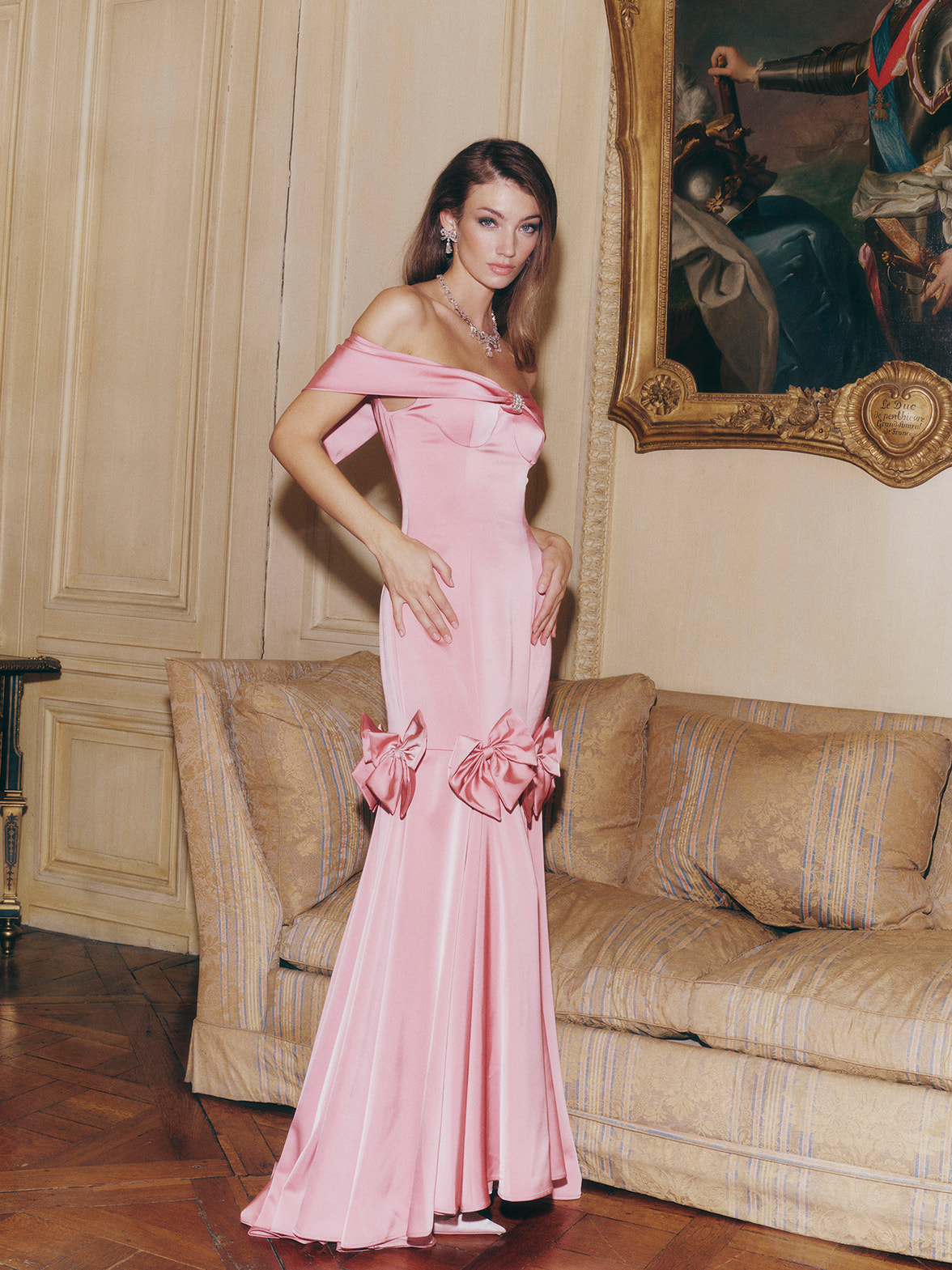
The Madeline is a pink stretch satin mermaid gown with an off-shoulder bardot neckline, a fitted bodice, a fishtail hem, and satin bow clusters at the lower thigh. It is the black-tie gala dress in the Nana Jacqueline gowns range.
The silhouette is the statement. Off-shoulder bardot neckline framing the collarbone. Fitted through the bodice and hip. A clean fishtail hem that opens at the lower thigh into a sweeping mermaid line. The fabric is stretch satin with enough body to hold the mermaid shape and enough give to walk in. A pearl and crystal chain finishes the natural waist. Two satin bow clusters sit at the hemline, the kind of detail that recalls early-90s couture and would not be out of place at a Vanity Fair Oscars party.
Pink is the color choice that makes this gown more memorable than the same silhouette in black would be. The shade is closer to a powdered rose than blush. The off-shoulder neckline catches light at the collarbone. The mermaid hem photographs beautifully from a distance, which matters because most gala photography is taken from across a room.
The Madeline is made to order. Production takes 3 to 4 weeks. If you are buying for a specific gala date, order at least 5 weeks ahead.
| Fit note: Made to order. 3 to 4 weeks production lead time. Runs small. Size up. Care: Dry clean. Where to wear: Black-tie galas, formal charity dinners, awards ceremonies, formal birthday celebrations, debutante balls, black-tie weddings. |
|---|
SHOP: Madeline Bow Dress Pink →
02: The Caroline, the Duchess Satin Gown

The Caroline is a powder blue duchess satin gown with a sweetheart neckline, ruffle shoulder straps, a backless construction, cascading side ruffles, and a fishtail hem with a center back slit. It is the satin gown in the Nana Jacqueline gowns range.
Duchess satin is the right fabric for a gala because of how it reads in evening light. The finish is luminous without being shiny. The hand is heavier than a slip satin and lighter than a structured taffeta. It holds the body close through the waist and hip, then opens at the hem into the fishtail. The ruffle shoulder straps are the softening detail; without them, the silhouette would read severe. Cascading side ruffles add fluid movement to a body-skimming silhouette that would otherwise stay still.
Powder blue is an unusual gala color and that is the point. Black, navy, and ivory are classic. Powder blue reads more memorable in a room of black gowns. It photographs beautifully under chandeliered light and against the warm tones of most formal interiors.
| Fit note: Runs small. Size up. The backless elastic band runs firm. Care: Dry clean. Where to wear: Summer formal galas, coastal black-tie events, garden formal dinners, outdoor banquets, seaside soirees. |
|---|
SHOP: Caroline Dress Blue →
03: The Gigi, the Liquid Satin Statement
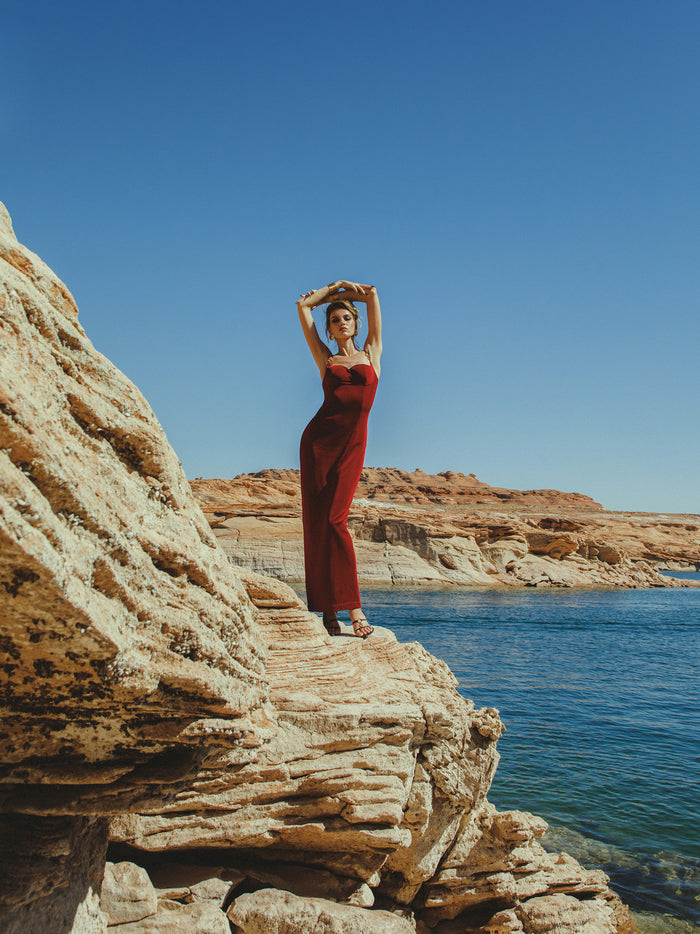
The Gigi is a red liquid satin column gown with a sweetheart neckline, gold chain straps, a cinched waist, and a back slit. It is the jewel-tone option in the Nana Jacqueline gowns range.
Liquid satin moves differently from duchess satin. The fabric is lighter, more fluid, with a higher sheen that catches light from a distance. The cut is closer to the body. The cinched waist defines the silhouette without adding structure that competes with the fabric. Gold chain straps replace the conventional satin or self-fabric strap, which is the detail that takes the Gigi from a clean column to something more pointed. The back slit is the second detail. It registers when the wearer walks away from the table.
Red is the most reliably memorable jewel tone for a gala. Sapphire, emerald, and amethyst all work. Red works hardest. The Gigi's specific red is closer to a true crimson than burgundy. It photographs without bluing under tungsten light.
| Fit note: Runs small. Size up. The fabric is elastic and fits close to the body. Care: Dry clean. Where to wear: Formal galas, evening fundraisers, awards dinners, institutional benefits, anniversary dinners, opera nights. |
|---|
SHOP: Gigi Dress Red →
04: The Emma, the Stretch Velvet Gown
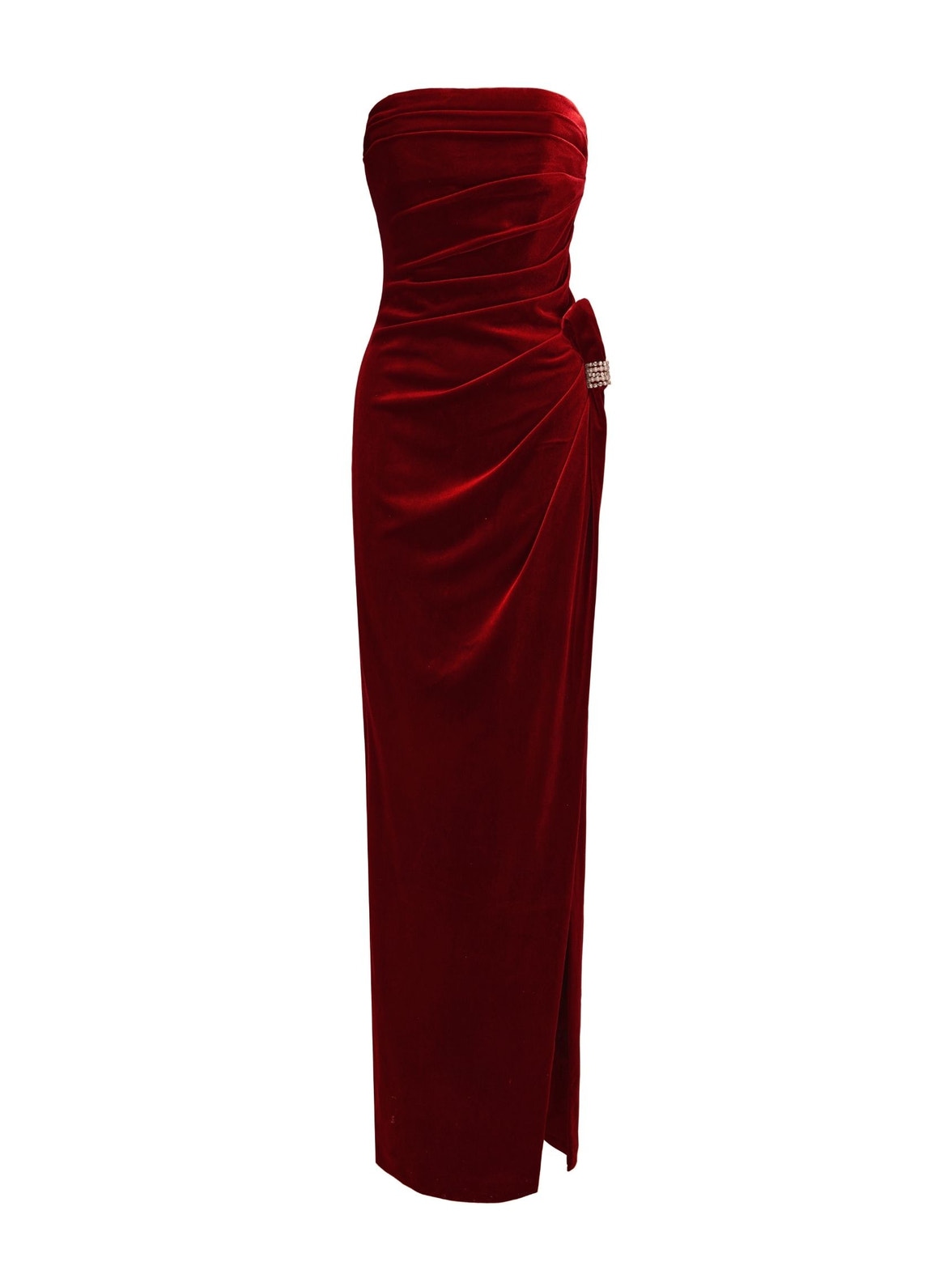
The Emma is a red stretch velvet strapless gown with a boned bodice, radiating front pleats, a side bow with pearl and rhinestone chains, a high side slit, and a draped hem. It is the fall and winter gala gown in the Nana Jacqueline gowns range.
Stretch velvet is the right fabric for a fall or winter gala. The pile catches light differently from satin, with a depth that reads richer in low evening light. The Emma's construction is more structured than a typical velvet column. A boned bodice holds the silhouette through the strapless line. Radiating pleats at the front add visible construction across the torso, and the high side slit gives the dress its movement. The side bow with pearl and rhinestone detail is the only embellishment, which is what keeps the gown from reading overdone.
The red is closer to oxblood than crimson, deeper and warmer than the Gigi's red. The two are not interchangeable. The Emma is an evening dress for the colder months, when the depth of velvet pile reads correctly and the high slit can be styled with closed-toe heels rather than sandals.
| Fit note: Runs small. Size up. The boned bodice runs close through the bust. Anti-slip bands inside the strapless line hold securely. Care: Dry clean. Where to wear: Fall and winter galas, holiday fundraisers, museum openings, year-end awards events, opera and ballet evenings. |
|---|
SHOP: Emma Velvet Dress Red →
05: The Mirelle, the Lace Gown for the Most Formal Evenings
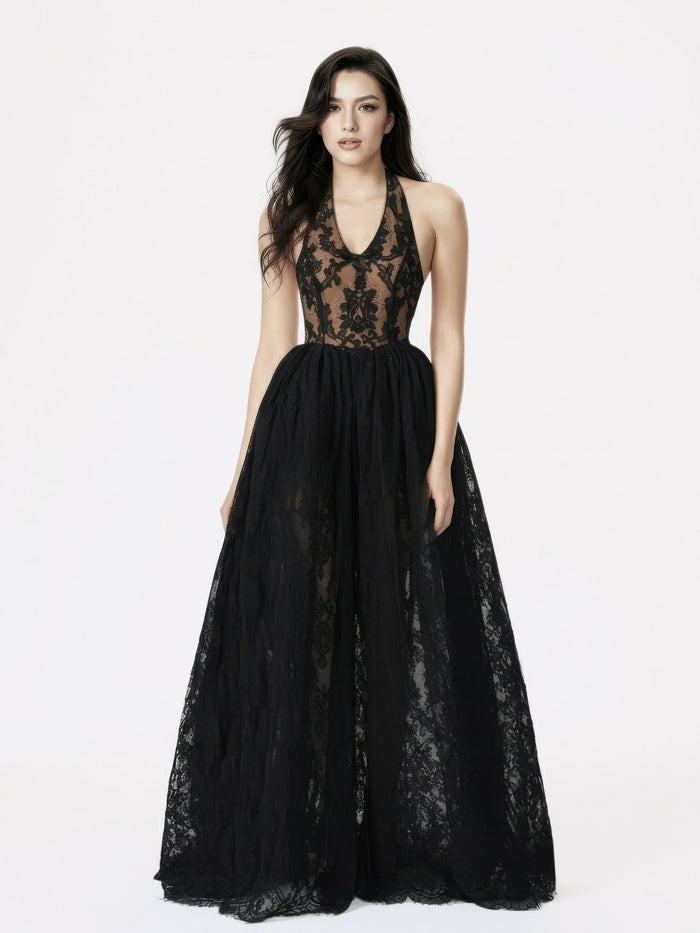
The Mirelle is a black 3D lace halter gown with a sheer mesh-lined bodice, a chest bow, and an A-line lace skirt with eyelash lace trim. It is the lace gown in the Nana Jacqueline gowns range, designed for the most formal evenings on the calendar.
This is the dress for the gala that asks for drama without a structured ball gown silhouette. The bodice is sculpted 3D lace on a nude mesh base, which gives the floral pattern dimension and depth that flat lace cannot achieve. The halter neckline frames the shoulders and collarbone. A small bow finishes the chest. The skirt is a full A-line in the same lace, with mesh support underneath, falling to the floor with the kind of weight that moves slowly. Eyelash lace edges the hem. The construction reads couture-adjacent without crossing into costume.
Black lace is the color and fabric combination that signals the most formal end of the dress code. Wear it to white-tie galas where a structured ball gown is not required, to formal museum benefits, and to the evening of a black-tie wedding when you are seated near the family. Pair with chandelier earrings or a statement collar. The dress carries itself.
| Fit note: Body-hugging halter bodice. The stretch mesh lining gives. The skirt has full volume. Size up if between sizes. Care: Dry clean. Where to wear: White-tie galas where a ball gown is not specified, formal museum benefits, the most formal black-tie events, opera galas, formal weddings as a non-bridal-party guest. |
|---|
SHOP: Mirelle Lace Maxi Dress →
How to Dress for a Gala: Fabric and Color
There are two questions that decide whether a dress reads gala-appropriate or not. The fabric, and the color.
Fabrics that read formal. Silk, satin, chiffon, lace, stretch velvet, sequined or beaded gowns, structured tulle. These fabrics carry their own formality. A simple silhouette in one of these fabrics will always read more appropriate than a complicated silhouette in a daywear fabric. Avoid jersey, denim, anything with a stretch knit hand.
Fabrics to avoid. Anything that reads daywear. Cotton poplin, linen, jersey, denim. Even an elegant cotton dress will read off at a black-tie gala. The fabric is the first signal of formality before the silhouette registers.
Colors that work. Black, ivory, and navy are classic and always appropriate. Jewel tones like emerald, sapphire, ruby, and amethyst are richer and more memorable. Metallics in gold, silver, and bronze photograph beautifully and read formal at every dress code level. Soft hues like champagne, dusty rose, powder blue, and midnight work in the right fabric.
Colors to avoid. Neon. Heavy patterns. Anything that competes with the architecture of the room rather than complementing it.
Accessories: One Focal Point

The right accessories take a gala outfit from elegant to memorable. The wrong ones make a considered dress look incidental.
Jewelry. One focal point. A statement necklace or dramatic earrings, never both. Crystal, diamond, or gemstone pieces match the formality of the dress code. If the gown is heavily embellished, a refined bracelet or cocktail ring is enough.
Shoes. Strappy heeled sandals, embellished pumps, or pointed-toe stilettos. Block heels and kitten heels work in metallic finishes. Formal flats are acceptable when they are evening-appropriate (satin or embellished). Sneakers, mules, and anything with a casual silhouette do not read gala.
The clutch. A compact embellished clutch or a satin minaudière. Skip the shoulder bag. The bag should look considered, not incidental.
Outerwear. A faux fur stole. A tailored wool coat in a neutral. Both maintain the formality of the dress underneath. Puffer jackets, leather jackets, and casual outerwear undermine the rest of the look in the time it takes to walk from the car to the door.
SHOP: Statement Jewelry →
What to Wear to a Gala: Putting It Together
Four complete looks that solve the four most common gala dress codes.
01: Classic and timeless. The Madeline pink mermaid gown. Crystal drop earrings. Pointed-toe heels in nude or pale pink. A small embellished clutch. Works for any black-tie gala.
02: Rich and romantic. The Emma red stretch velvet gown. Minimal jewelry, a single tennis bracelet or stud earrings. A faux fur stole. Works for fall and winter formal galas.
03: Modern and confident. The Caroline powder blue satin gown. Bold chandelier earrings. Strappy stilettos. A metallic envelope clutch. Works for summer formal galas and outdoor black-tie events.
04: Dramatic and jewel-toned. The Gigi red liquid satin gown. A simple tennis bracelet. Embellished heels. Works for any formal gala where the room calls for color.
Each look honors the dress code and leaves room for personal style.
Fit and Sizing: What to Know Before You Order
Sizing summary: Nana Jacqueline runs small. Size up at least one size from your usual American size on every gown in this guide. The Madeline is made to order with a 3 to 4 week production lead time; order at least 5 weeks ahead of your gala date.
Beyond the general rule, a few piece-specific notes. The Madeline runs especially close through the bodice and the fishtail hem holds the silhouette firmly. The Caroline backless construction uses a firm elastic band to hold the dress in place; size up so the band sits without pulling. The Gigi is liquid satin with elastic; the fabric is unforgiving of sizing down. The Emma boned bodice runs close through the bust and the anti-slip bands inside the strapless line hold securely. The Mirelle has a stretch mesh halter bodice with give and a full A-line skirt that does not compete with the fit through the torso.
For galas in the next four weeks, the Caroline, Gigi, Emma, and Mirelle ship within standard production timelines. The Madeline does not. If your event is less than five weeks away, choose from the other four.
What to Wear to a Gala: Your Questions Answered
What is a gala?
A gala is a formal evening event organized around a charitable or institutional purpose. Most galas are fundraising dinners hosted by museums, hospitals, foundations, universities, or cultural institutions. The most recognizable example is the Met Gala, the annual benefit for the Costume Institute at the Metropolitan Museum of Art. A gala is more formal than a wedding and significantly more formal than a cocktail party. The dress code is part of the event's design.
What is gala attire?
Gala attire is formal evening wear that matches the dress code specified on the invitation. The three most common gala dress codes are formal (floor-length gown in an elevated fabric), black tie (long gown or polished evening separates), and white tie (ball gown silhouette with statement jewelry). When the dress code is not specified, default to a floor-length gown in silk, satin, lace, or stretch velvet.
What is the gala dress code?
The gala dress code is usually specified on the invitation as one of three options: formal, black tie, or white tie. Formal calls for a floor-length gown in an elevated fabric. Black tie calls for a long gown or refined evening separates with restrained sparkle. White tie is the most formal dress code in existence and calls for a ball gown silhouette, statement jewelry, and traditionally elbow-length gloves. When the dress code is unclear, choose floor-length.
What should I wear to a gala?
Wear a floor-length gown in an elevated fabric like silk, satin, lace, or stretch velvet. Choose a silhouette that flatters your frame. A-line and fit-and-flare cuts work for most body types. Mermaid silhouettes add drama. Sheath columns read modern and clean. Pair the gown with one focal-point jewelry choice, elegant heels, and a compact embellished clutch.
Can you wear a cocktail dress to a gala?
Generally no. For semi-formal galas or creatively themed events, a midi-length dress in a formal fabric like lace, satin, or sequins can work, but for any black-tie or white-tie event, floor-length is expected. When the dress code is unclear, the safer choice is always the longer dress.
Does a gala dress need to be long?
For most galas, yes. Formal and black-tie dress codes call for floor-length gowns. If the invitation specifies semi-formal or creative interpretation, a refined midi can work, but it should be paired with elevated accessories to maintain the formality of the room.
What colors work best for a gala?
Black, navy, and ivory are classic and always appropriate. Jewel tones like emerald, sapphire, ruby, and amethyst are richer and more memorable. Metallics in gold, silver, and bronze photograph beautifully under chandeliered light. Soft hues like champagne, dusty rose, and powder blue work in the right fabric. Avoid neon colors and heavy prints, which compete with the formality of the setting.
Does Nana Jacqueline run small?
Yes, Nana Jacqueline runs small across most of the collection. As a general rule, size up at least one size from your usual American size, especially through the bust and waist. All five gowns in this gala guide benefit from sizing up.
Dress With Intention
A gala is not a dress code to solve. It is an event that asks you to participate in its formality. The dress is the first part of the participation. Choose the silhouette carefully. Let the fabric carry the look. Edit the accessories down to one focal point. The entrance takes care of itself.
Shop the Collection
You Might Also Like
What to Wear to a Banquet → The Nana Jacqueline guide to banquet dressing, covering elevated formal occasions outside the gala calendar.
Wedding Invitation Dress Codes Explained → The full breakdown of formal, semi-formal, black-tie, and white-tie wedding dress codes, with the dresses that solve each one.
What Color Can a Wedding Guest Wear? → The Nana Jacqueline guide to wedding-guest color rules, including the colors to avoid and the ones that always work.